


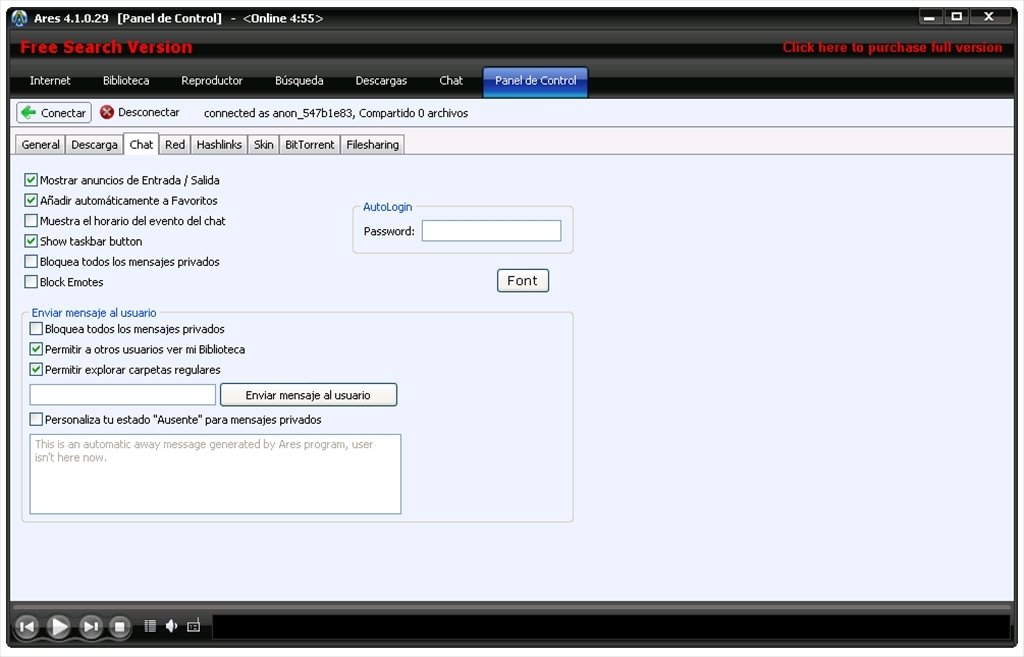
A fork of the popular Ares download software
Download Ares Destiny for free and start downloading everything that you want from Internet by means of the P2P networks. We are sure that you have heard people talking about Ares, the popular P2P download client. Ares Destiny is a fork of this program that uses the Ares network, one of the networks that contain more contents to provide you with all the advantages of peer-to-peer.
The latest and quickest version of Ares.
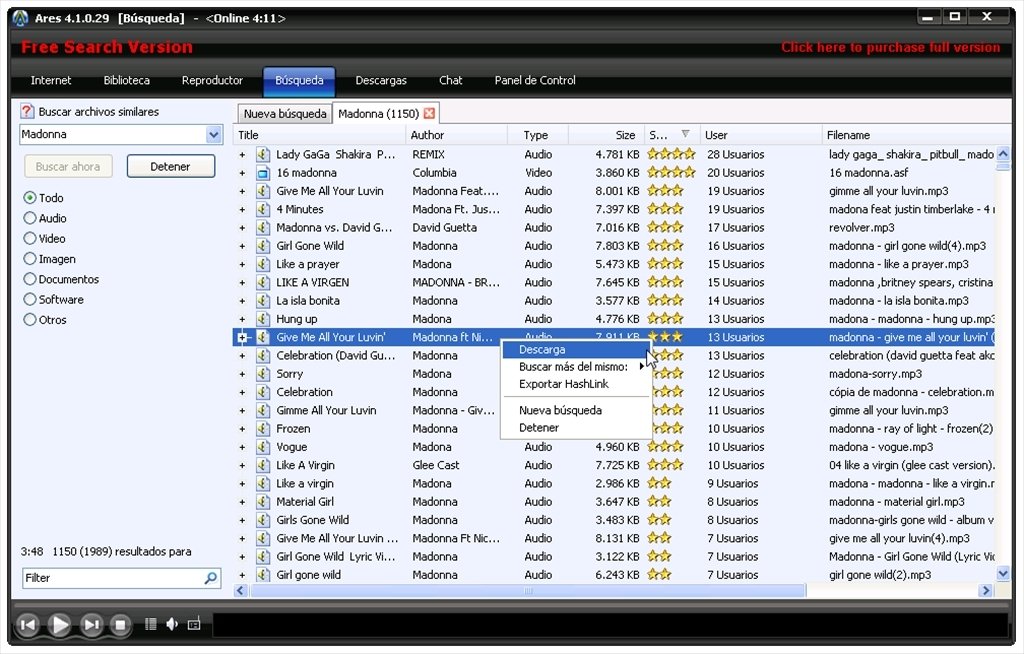
This alternative to the traditional Ares can be the perfect system to share files of all kinds with millions of users: videos and films, music, images, documents and programs... With Ares Destiny for Windows 7, Windows Vista or XP, no user will act as a server or client; they will all take part simultaneously in both roles to create nodes that make it possible for the network to work.
Features
- Download files from the Ares network.
- Important improvement to the compatibility with other networks, like eDonkey or BitTorrent.
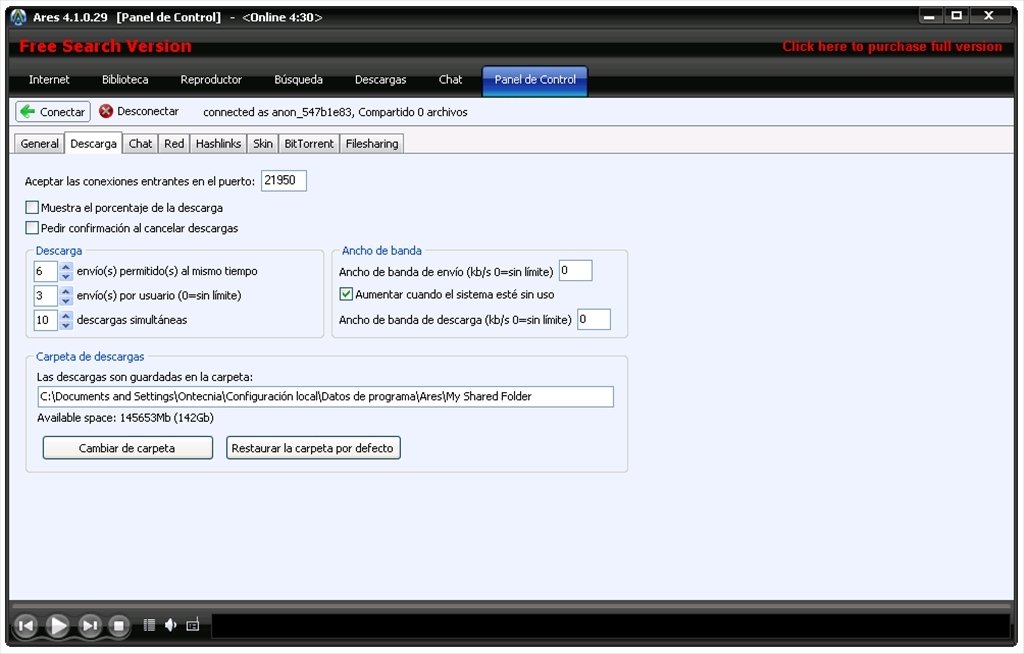
- Interface that is similar to that of the original Ares. If you have used it previously, you will find it very easy to move around.
- Includes an integrated player to open the downloaded files.
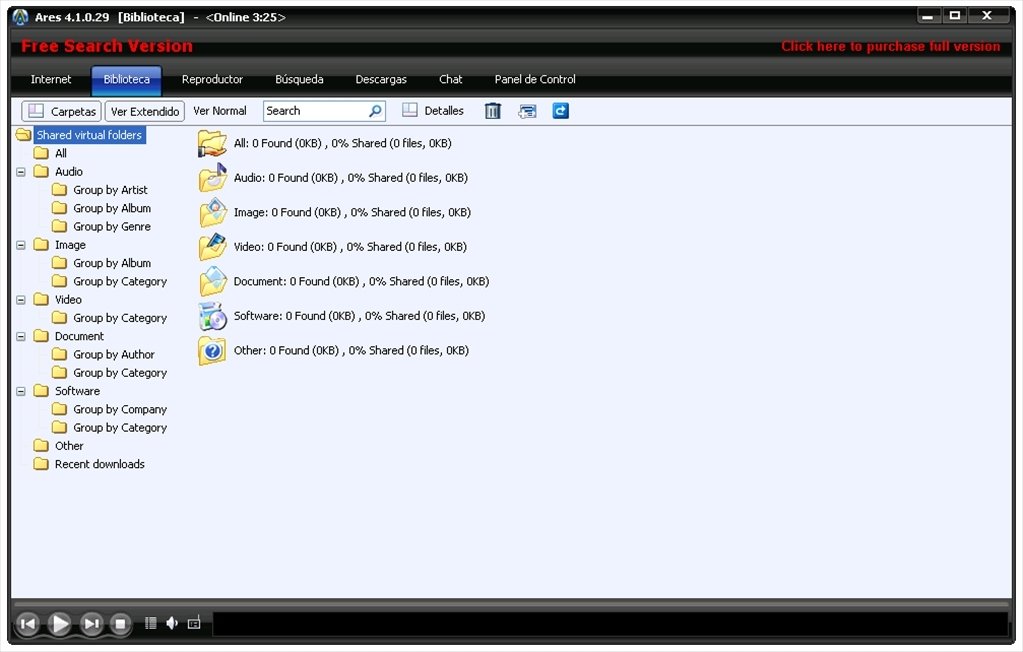
- Organize and catalog all the contents properly.
- Chat function to communicate with other users.
Download quicker thanks to the Ares network
Since the P2P were first launched many clients have appeared that are capable of connecting to them, and the majority have ended up developing their own network in search of a higher download speed or to make them easier to use. That has been the case with eMule, iMesh o eDonkey 2000 and the eDonkey network, of LimeWire or BearShare that used the Gnutelle network or BitTorrent, that uses the network of the same name.
Ares Destiny uses the Ares network, based on the Gnutella network, that was already used by its big brother. Thanks to this you will be able to accomplish higher download speeds and a larger amount of results in the searches.
Here is Ares Destiny in direct download! Download Ares Destiny for free and start downloading files from P2P networks.
Requirements and additional information:
- The trial version only allows you to search.
- To download, you must make a recorded payment.
- Internet connection is required to complete the installation.
 Elies Guzmán
With a degree in History, and later, in Documentation, I have over a decade of experience testing and writing about apps: reviews, guides, articles, news, tricks, and more. They have been countless, especially on Android, an operating system...

Antony Peel